Showing posts with label Dairying. Show all posts

Monday, October 24, 2011

Patch


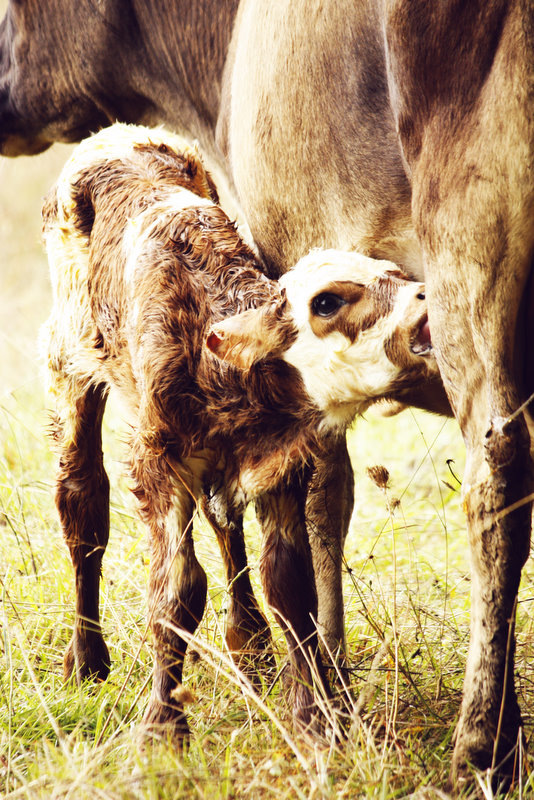
Praise God for allowing Christi and I to be there to help with the birth... got to finally help pull a calf... God is so good.

(All pictures credit to Christi Davis Photography)

Wednesday, September 14, 2011

These Folks Need Facts

Things like this drive me nuts.

I read an article http://www.healthy.net/scr/Article.aspx?Id=777 . Great, other than this quote:

"Cows have four stomach with which to digest their own milk. Cow's milk is just not fit for human consumption, especially not when it's full of bovine growth hormone and antibiotics. Don't feed your children cow's milk. They just don't need it; in fact it's bad for us all unless you are dying of starvation and its the only available source of protein. The only "healthy" dairy product for homo sapiens (that's us) is yogurt, which is already partially digested with enzymes."


No, when calves drink milk, it completely bypasses two of the stomach compartments: the rumen and reticulum, by means of the esophageal groove. It is digested in the omasum and abomasum by enzymes... much like human children digest breast milk.


It is an error to say that all milk is not a good food for humans, simply because pasteurized milk is a known contributor of many health issues. In a non-compromised/lactose sensitive individual, raw dairy products provide their own enzymes for proper digestion and are a great food for children and adults, when used to supplement a natural whole foods diet.

Lol. Peoples. :P

Sunday, August 21, 2011

One Sad Necessity

Little Dorrit lost her voice this morning...

I can't imagine anything more sad than a calf going hoarse from mooing after being separated from it's mom...

...except maybe a mama cow who looks like she's crying while she moos back.

Sad necessity... baby was tearing up mama's teats with her sharp teeth and was growing far too tall to reach the low udder to drink. She'll be happier on the bottle until we wean her in a few months.

Monday, August 8, 2011

Farm Updates

Last week I found a buyer for Chestnut, one of our Angus/Jersey cross heifers. We still have Cocoa for beef, so business-wise I think it was a good decision to sell one animal before winter and high hay prices hit.


Baby Dorrit is a testimony to the benefits of leaving the calf on its mother, she's huge and very healthy. We're just struggling to put weight back on her mama, Mattie, who is giving at least 7 gallons of milk per day - right off her back, of course. :bangs head on desk: I love Opal, my fat wonderful cow... she's a brick, still giving almost 4 gallons a day, steady as you please. Jani will be dried off in a week, getting big with baby due mid-October.

Both Mattie and Jani tested as A2/A2, which is a praise, and I may get our 14 month old Jersey heifer Shiloh tested just for kicks. She's a gorgeous animal, I'm impressed that she has performed so well on just grass.


I wish it was all roses, though... Mattie came down with the first case of mastitis on our farm. Hopefully it is improving, and only one teat is affected.

I caved in... and bought two piglets... lol, I'm nuts. They escaped their pen the first day, and luckily we got them back in before the cows trampled them to death. It has since been quiet for the past few weeks. Then Sunday night someone opened their pen door and they escaped again. Isaac and all the kiddoes enjoyed the wild pig chase... the pigs' owner, not so much enjoyment :P

We bought 10 ton of premium eastern OR orchard grass hay to fill the barn. Very spendy, but good for the animals. Grain will need to be purchased next month, and then we should be set through December.

Sunday, July 3, 2011

Another Blessing

I feel so richly blessed... Mattie delivered a big heifer calf today. Name will probably be Little Dorrit ;) Daniel and I drove up, I saw Mattie standing out in the field looking noticeably thinner and occupied with something in the grass. The baby was still all wet, so I think we missed the birth by less than 10 minutes.


This was the first calving where I allowed all six cows to be in the same field, and I loved watching how they gathered around the baby protectively when our neighbors came over to look, and took turns butting the dog away, butting each other away when they got too nosy, and helping the baby to her feet and nudging her toward her mamma when she got confused.


This was also the first calving where I offered the new mamma a big bucket of warm molasses water. She loved it, I think the sugar offers a good pick-me-up to replace all the energy they lost during labor.


Thank you, God, for my cow girls.

Thursday, June 30, 2011

So True

"There's something about getting up at 5 a.m., feeding the stock and chickens, and milking a couple of cows before breakfast that gives you a lifelong respect for the price of butter and eggs." ~Bill Vaughan

Wednesday, June 29, 2011

Lol!

Found this quote in 'Keeping a Family Cow' by Joann S. Grohman...

"A young fellow wantin' a start in life just needs three things: a piece of land, a cow and a wife. And he don't strictly need that last."


Just kidding, but a cow is indeed a generous creature...

"With my cow, I am able to serve exceptionally fine food and I am not stingy with the butter and cream. My cow supports my chickens so I always have eggs. She also gives us a calf so there is no meat shortage. Her extra skim milk supports a pig so there is no bacon and sausage shortage. And she provides fertilizer for the garden so there is no vegetable shortage. The cow is a generous animal. She improves life for everybody."

Monday, June 13, 2011

Alternative Treatment Seminar

Dr. Paul Dettloff, a highly acclaimed vet from Wisconsin, came to Oregon to teach a basic seminar on alternative medicine for large animals (sheep, goats, cows), and a friend and I decided to see what it was all about.

What a whirlwind event. Five hours of intensive discussion, lectures and information overload.

Overview: the most effective medicine is prevention. Healthy animals can only be cultivated by starting with the three pillars: 1. highly-mineralized soil, 2. full-stemmed forage, 3. high brix. Supplementation is essential, as well as culling to improve animal genetics. Beyond this starting point, well-made herbal medicines have the potential not only to equal conventional treatment, but exceed the current standards while caring for the whole health of the animal and not allowing harmful bacteria to mutate out of control.

Here are some of my notes for perusal...


Alternative Treatments

Aloe vera supports the immune system by suppressing cortisol, a stress hormone. Dosage is 1 oz. per hundredweight, 2x a day. Has 10 different uses, including: heals the epithelium, synovial joints, and is also anti-inflammatory.

Vit. C and other antioxidants scavenge debris and stimulate the Thymus gland, which is directly responsible for producing T-cells in the immune system. The tincture form lasts up to 18 hours in the bloodstream, as opposed to only 4 hours when taken in powder/capsule form.

Humates: think gut health. Cryptosporidem and coccidiosis prevention in calves, improved forage utilization in adult animals, etc. Dr. Paul's Calf Start contains humates: dosage is 1/2 oz. per day for four weeks after calving, and 3 days at weaning.

Arnica: use for hemhorrage, trauma, injury (best combination is arnica, comfrey and colloidal silver). Either herb or homeopathic form works.

Burdock root: use for fatty liver prevention in cattle.

Garlic: many uses, typically only off-flavors milk when wild onion tops (flowering) are eaten fresh. Dried garlic is not a problem in typical dosage.

Lavender essential oil for wounds/foot sores.

ACV is a precursor to carbonic acid... which in turn liberates calcium for absorbtion (aha!). One of the best forms of supplemental calcium is Oregonite calcium. ACV also helps alkalinize the system (the appropriate pH of a cow's rumen is 6.5... most animals feed a lot of grain becomes dangerously acidic: acidosis).

Supplements for dairy cattle should include (all free choice, loose minerals) kelp, Redmond sea salt, humates, and a 2-1 or 1-1 blend of calcium/phosphorus.


Animal Health

What to look for when purchasing an animal:

* Shiny coat (long-haired in winter)
* Thymic swirl (on neck above brisket) will reflect sunlight
* 'Happy lines' along body
* No red tinge (shows copper deficiency, parasites or stray voltage)
- Look at ear/tail of Jerseys
* Strong feet/legs.
* Wide (think heavy-set) body.
- Calves raised on milk replacer will be 'two-stories' (tall, all legs), often ears will be wider than the rest of the body, thin and anaemic.
* Eyes - alert but not jittery (indicates too much potassium in diet - i.e. NPK fertilized hay.
* Talk for a few minutes to the animal, rub along the cowlick and down the neck.
* Cows - test for Staph A and Johnnes
* Goats - test for Johnnes

Johnnes disease: many scary similarities to the human Chrohnes disease. Iron with a hydrogen atom added has an added positive charge (acidotic state), and has been linked with Johnnes. Cause: GMO corn and changes in gut flora. Johnnes is usually caught/transferred before the age of 6 months, adult cows rarely get it.

Assisting calving: In a breach birth, run hand up right side of calf and down left, check for cord caught around the left leg. Be patient and pull slowly. In uterine torsions, vulva looks more puckered. Don't be afraid to get in there and have a feel around, but know when you're beat and call for help.

Ketosis: treat with ACV, molasses, Dr. Paul's Wellness Tonic, and some grain.

Pressure points: at the insertion of the milk vein, towards the animal's head, put you finger in the little hollow and press to help with milk let-down. To stop bleeding (especially from the udder), pull back on the pin ligaments (towards the head) until stitching is in. There are also pressure points along the back/neck when meeting a new animal, to calm them.


Soil Health

Rather than thinking in terms of NPK fertilizer, the CEC (Cationic Exchange Capacity) of the soil should be about 60% Calcium, 15% Magnesium, and 5% Potassium.

Field amendments in a wet climate like NW Oregon are almost always deficient in Calcium, Sulphur and Boron. For soil improvement, use Gypsum and apply foliar sprays containing Solu-bor annually.

Foliar spray for your pastures/lawns:

In a 2-gallon container, mix:

3 oz. ACV (cationic activator)
4 oz. Liquid Fish (protein)
3 oz. molasses (energy)
3 oz. liquid kelp (trace minerals)
4 oz. humic/folic acid
1/4 C. Redmond salt
1 quart raw milk (beneficial bacteria)
2 oz. garlic (barrier)
optional: Solubor (boron) and Sulfur (1 oz.) as indicated by soil test

Sunday, May 22, 2011

Wednesday, April 6, 2011

Our newest baby girl :)

She's a Fleckvieh/Jersey cross heifer, and looks like she'll take after her papa.

We're thinking of naming her Crystal...

Thank you, God, for the safe delivery of this little one.


Thursday, March 3, 2011

Dairy Cow Feed 101


I have learned so much this year about feeding and caring for dairy cows.

Wow.

And this time last year I thought I was an expert ;)

Next year I'll look back at this moment in time and wonder why I thought I knew so much... now to implement some of what I am about to share with you...

Here's some facts about feeding dairy cows:

HAY

Your best friend is premium grass hay, cut before it goes to seed and dried quickly under optimum conditions, baled in square bales and kept under cover. This will look extremely soft (not brittle), green, you will see a majority of leaves, not stems or seed heads. Here in the hay fields of Willamette valley, you can't get this kind of hay. Our wet haying season and lack of warmth in June means optimum haying conditions are very rare. Look for a supplier of quality eastern OR hay (you may have to go with someone selling horse hay, as horse owners are EXTREMELY picky and you are likely to find top quality stuff) and buy a bale to take home to your cows. Set out a couple different types of hay and see which ones they eat first. It should be obvious. No amount of grain or alfalfa can make up the difference in the lack of HIGH QUALITY HAY. I am experiencing this right now, and next year I will gladly pay the $230 per ton for good hay, and my cows will be the healthier for it. Remember, a cow may get as much out of 2 tons of poor hay that they will out of only a ton of premium stuff, so you aren't usually saving money when you buy the cheapest you can find. Dairy cows are not beef cows, so don't treat them as such.

ALFALFA

Your next best friend is Eastern OR alfalfa. Look for alfalfa that is mostly leaves, and small-stemmed. Usually they will be able to tell you the dietary analysis of the batch, and check for high protein (21%). Obviously the most important thing is that it is high-energy and high mineral-density, but that is harder to discover. Since alfalfa quality changes with the year, season, number of cutting, and field harvested from, be willing to change supplier if quality to that which sinks less than acceptable. Our suppliers usually begin with awesome stuff, and each successive order becomes more and more course, until finally the cows spend all their time nosing through the stems trying to find the sparse scattering of leaves.

GRAIN

A cow should not need pounds of grain daily to gain the appearance of health. We have made them that way. It is a travesty against our bovine friends, shame on us! Unless you are blessed to find a cow raised from day one on grass, that is truly healthier because of it, and genetically seems in every way to be created for a grass-only diet, here's some options. Make your own grain mix, but watch that the protein doesn't creep much above %16 unless you don't feed alfalfa in addition. If you feed lots of alfalfa, nix that additional amount of protein. Grains to use are wheat, oats, barley, triticale, and include sunflower seeds, some liquid blackstrap molasses, and kelp meal for minerals. Watch your cows' condition, but I'm beginning to think that if they lose weight on this blend, it is the fault of poor hay, not necessarily the lack of corn/soy in the diet. However, something like Calf Manna may boost a dangerously thin cow to a better condition from which you can then make more lasting diet changes. If your cow needs grain, the rule of thumb is to give a Jersey 1 lb. for every 3 lbs. of milk she produces (up to 15 lbs. or so, though many people disagree where the cap on amount is). Obviously you can give Holsteins or other large breeds more. This means if she produces 4 gallons of milk, you need to be giving her about 10 lbs of grain.

MINERALS

Kelp.

What? You want more information than that? Sorry, I'm not going to make it more complicated just 'cause you want it to be ;) Try offering kelp meal (I've heard Thorvin is best, but my cows usually prefer other brands), a mineral blend like Redmond conditioner, and naturally dried unrefined Redmond sea salt in a three-compartment mineral box, and see which one disappears. Kelp wins out every time. Their coats are shiny, milk is more nutritious, and they roll with the punches easier. Kelp is such a wonderful substance, that I add it to their feed, even if they get it free-choice 24/7. Do yourself and your cows a favor, throw out the mineral blocks.

ALL THE EXTRAS

Raw apple cider vinegar. Use especially before/during/after calving and breeding.
Aloe Vera juice. Immune booster during times of stress; moving, new animals on the farm, and before and after calving.
Various herbs. (mastitis treatment/prevention, sweeter milk, gain weight, anti-microbial, anti-parasitic)

A couple key points on FEEDING...

During cold spells, a cow will eat up to 30% more calories in order to keep warm. They will choose carbs (like good hay and grain/molasses) over alfalfa, and you should cater to those needs. Protein usually = more milk production, and you need to gauge protein needs at each season and lower the protein/up the carbs if cows start losing body condition. Ketosis is caused by a lack of caloric intake esp. during lactation, up the molasses and grain. Milk fever can be caused by feeding a cow too much rich feeds such as alfalfa and grain during the dry period, thus causing a major imbalance of calcium/magnesium after calving. To prevent this, slowly switch to feeding only good hay/minerals during the drying-up period (6-8 weeks before due date), and stay on this until 1-2 weeks before calving, where you slowly introduce a little more grain/alfalfa each day until they calve. Then pack on the calories, momma cow (does this sound familiar, you moms out there???)! Dairy cows are big animals who tend to give and give until they have given all of themselves, so don't underestimate how much food your girl truly needs to bless you with plenty of milk, food for the calf, and keep flesh on her own bones.

...aaand in closing...

Here is the #1 advice I have to give a cow-owner-wannabe... do your research, find a trusted friend who knows some small-farm cow owners who may have a family cow to sell, look for one that was raised on grass and is an 'easy keeper' who does not need corn/soy in her feed to maintain body condition during lactation, is kind and easy to handle, and PAY WHAT THAT COW IS WORTH. I just shelled out $2500 for a beautiful new Jersey today, and she has been raised in the optimum setting for a healthy and vibrant life. If you go to a big dairy and ask for a good cow, they will either sell you an obviously cull cow dirt cheap, or a slightly better one for the full going rate. Even if you get what is considered a 'great' cow, she may need large amounts of optimum feed in order to keep from rapidly losing body condition and health. Avoid all these options and you will likely avoid many sleepless nights and headaches.

Wednesday, February 23, 2011

Things that make me tick


Actually, I'm doing my bi-annual read-through of Joel Salatin's 'You Can Farm' and doing one of the exercises he recommends for expanding your vision and encouraging innovation for your farm business.

I would dearly love to bounce ideas off a fellow small-farmer who is successful. Walk the land, point out problems and possibilities I have not thought of. Where's a mentor when you need one? :) The problem with diving headfirst into dairying like I have is that you are not free to intern for six months at Polyface in Virginia. :bangs head on desk:

"We must view ourselves as earth stewards, not cattle farmers, grain farmers or vegetable producers. The whole mentality of viewing ourselves as species-specific practitioners destroys the holistic mindset that sees the farm and, indeed, our whole lives, as being a non-compartmentalized whole. We must stop this mental divorce and appreciate that as farmers or would-be farmers we are caretakers first and foremost. Within that context, we will find things at which we excel, and things on which we may want to concentrate. Just because you have a proficiency to grow vegetables does not mean you know nothing about livestock or pasture management. Nature is diverse, and it is a whole. Let's be done with compartmentalized thinking. ~ You Can Farm"


I am a land steward, with an affinity for dairy farming.

Many states do not allow farmers to make use of what I believe to be one of the most financially lucrative farming business: raw milk dairying, selling direct to consumer. With five cows in this region of Portlandia, you can easily gross $50,000 a year on 5 acres of prime pasture, with a net earning of around $25,000 if you become established in the niche market which is rapidly growing.

...Here's a few things that make me tick, and that I either am currently raising or would love to raise on a farm...

Cow's milk
Butter
Cream
Yogurt
Eggs
Honey
Goat's milk
Goat
Pork
Beef
Rabbit
Chicken
Turkey
Herbs
Blueberries
Raspberries
Marionberries
Strawberries
Grapes
Apples
Rhubarb
Asparagus
Lilacs
Soap
Beeswax candles
Ready-to-lay hens
Heifers for families wanting a milk cow


...Brainstorming exercise for how to improve current set-up and realization of above dreams...

MiG renovations: better water set-up, shelter, more portable inner fencing

Business renovations: sell calves instead of raising, purchase parlor dishwasher, barn extension/renovation for winter cow housing/hay/biomass storage, establishing herd shares and co-op purchasing, implement proper compost spreading/regular foliar feeding of pastures, stockpiling carbon from sources like wood chips from road crews.

Advertising: website, business card, regular farm tours, 'milking' experience/lessons for homeschool groups/families.


Let's see... divide myself in half, grow an extra arm or two, and this list is a distinct possibility!

Actually, I have a bad head cold, my back is hurting (thanks for the dose of humility, God, I'm falling apart), and it's snowing outside, otherwise I'd get out there and start tackling the handwritten chore list of spring preparations. There is just so much to be done, and I'm only 3 years into the 5-7 year learning curve where my farming projects will not be profitable enough to earn a decent salary, so I can't pay my siblings to help as I would wish. I have to keep telling myself the experience I am gaining is invaluable.

Thursday, February 17, 2011

The Soy Controversy


A brief synopsis after reading 'The Whole Soy Story' by Kaayla T. Daniel

Soy marketers claim that their product prevents cancer; is a safe and heart-healthy alternative to animal products; is economical, land-preserving, and the solution to world hunger; and any anti-nutrients/contamination is not enough to cause people to question its use in infant formula, soy milk, breads, margarine, and energy drinks/bars/meal re-placers. When asked for their reasoning behind the push for people to consume large quantities of soy products and the inclusion of soy bi-products in a majority of prepared food items and supplements, proponents of “the yellow jewel” claim that inclusion of large amounts of tofu and soy in Asian diets is the reason those cultures see fewer incidents of certain types of cancer. In reality, there is reasonable doubt that the quantity and quality of soy products Chinese and Japanese people consume is what we have been led to believe. Ancient use of the plant was mainly as a green-manure crop, or whole beans fermented with fish for over a year and used to flavor soups and other dishes in small quantities next to rice and vegetables. Rarely was it used in the fresh forms of soy milk, flour, tofu or byproducts like hydrolyzed vegetable protein, as Asians did not prefer the taste, smell or unruly behavior of soy in its mature and unfermented form.

The main problem behind soy, however, can't be wholly placed on the plant itself: it is the overuse, abuse, and genetic manipulation by the food industry. It's like eating bananas – a banana or two per day is not going to kill you, in fact it may be good for you, but put a genetically modified banana as a main ingredient in your breakfast cereal, dehydrated banana carb powder in your energy drink, a meat-replacer banana main course at dinner, and banana-flour bars for desert, and very quickly you will feel the results of iron-deficiency anemia and a buildup of certain pesticides and toxins found on bananas because of their cultivation. Any substance in excess has potential to cause harm. Human development and regeneration depend on an immense variety of minerals, vitamins, enzymes, phytochemicals, macronutrients and the interactions thereof. No one food except breast milk contains all the nutrients necessary to sustain life for years without later consequences, yet even that food has been partly replaced by fortified soy milk infant formula. Recent developments show formula makers scrambling to add more and more substances to their mixes as children raised on formula develop deficiency and toxicity symptoms.

A major argument put forth to the public is that women who eat soy products and take soy isoflavone supplements have a lower risk of breast cancer. However, even if this were to be found true, are the far more numerous cases of soy-caused thyroid imbalances, cancer of the GI tract and pancreas, allergies, and reproductive impairment worth a slightly lowered risk of contracting breast cancer? In addition to phytochemicals that interfere with normal hormonal signals, unfermented soy products contain phytates, oxalates, goitrogens, lectins and protease inhibitors: plant components possibly helpful in small quantities, but major anti-nutrients and cytotoxins in excess. With all the research being done on ways soy helps the human race, shouldn't warnings be raised about it's potential risks? Then again, the very assumption that soy is a healthy alternative to animal products is a shaky foundation that needs to be propped up by as many positive articles in medical journals as possible.

Butter, milk, cheese, meat, eggs began to fall into disfavor around the same time as the soy oil industry really took off. Since animal products were seen to cause heart problems in otherwise healthy individuals, a ready-made solution presented itself: why not use the soy protein left over from soy oil production to create a healthier, vegetarian, animal-protein replacer in the form of soy milk, soy burgers, and margarine? The problem is, human omnivores misplaced their hope in the soybean instead of supporting responsible land-management and pastured animals that are not only a source of complete protein, but are also filled with nutrients such as omega-3's, highly absorb-able forms of minerals such as iron and calcium, vitamins B12 (not found naturally in plants), etc.: all without needing to be fortified. It doesn't make sense that an industry would spend billions in researching how to make a non-dairy milk, when the raw cows and goats milk available to us is already complete and irreducibly complex, created by a God who knows and cares for His people.

You might just try a glass.

Monday, January 31, 2011

Goodbye, Nevada


We found our Holstein a good home with some folks where I'm sure she'll be happy and appreciated! Makes me feel jolly just thinking about it :)

Wednesday, January 12, 2011

Great news!!!

Mattie is four months pregnant!!!


Monday afternoon I poured out my heart to God, kneeling before Him, humbled in the realization that all my dreams and plans are nothing to Him. His Will will be accomplished whether by my life or my death.

Yet still, He chooses to give and take away. Recently He has chosen to give me hope in my dairy business by showing Himself mighty where I am weak.

Mattie and Jani spent some time with a bull back in September, but we had to send the bull back after only three weeks, so there were no guarantees that they successfully bred.

And then Jani shows signs that she is not pregnant. Ugh. There were also some indicators that Mattie was not - I was devastated. My options were to keep trying AI on both, or get another bull for six weeks and pay an arm and a leg to feed him. And then Mattie did not show signs of heat, and I thought, "oh no, not again". Last year there was actually half a year where she wasn't cycling, and we had a hard time getting her going again, so my mind was overwhelmed at the thought of having to go through that again. She is what is called a 'hard breeder' and throws 'silent heats', so AI is not usually an option.

I resigned myself to the possibility that we would simply have to sell one or both cows this next year. It would break my heart, but I run a business, not a petting zoo.

Then God came through - a friend came over to do AI on Jani and preg. check Mattie on Monday evening. She told me that Mattie is four months along... I laughed, I cried, I went into the house and fell on the couch in hysterics.

Yep. That's me.

Mom and Dad looked at each other... "was that what we were like finding out about each one of the kids?" Dad wondered out loud, "I wonder what she would have done if BOTH cows were pregnant."

LOL

Lately I've been wondering if I'm not a human, or whether I'm just so individual that the chances of finding another dairy cow fanatic like me are one in a million. :P

Monday, January 10, 2011

Some Like It Raw Video

http://aloveproduction.blogspot.com/2011/01/some-like-it-raw.html

I can't figure out how to post the video itself, but copy and paste the link, it's worth it :D

Saturday, January 1, 2011

Shiloh Knoll Farm Newsletter


Shiloh Knoll Farm
Winter 2011 Newsletter


Hello Friends,

I'm grateful to God for allowing my family to live in this beautiful part of the country, and for giving us the means to provide a little real food for folks like you who take responsibility for your family's health and choose a better option than conventional fare. I applaud you, this country needs your wisdom and encouragement to do better.

Spring saw the arrival of our first batch of broilers. Believe it or not, I actually enjoyed processing the birds! Well, that and tasting the final product... I couldn't believe the flavor and how my body reacted positively to meat that was free of hormones, antibiotics, unnatural feed, and raised on green clover rather than in confinement houses. It's not all roses, though. We faced a lot of trials this year, with weather and varmints causing the most trouble, yet through all of my mistakes I gained experience. Because of that, I am confident and excited about raising chickens again, and hopefully will have pasture-raised and home processed chicken and turkey for you next year. In a few months I will send out an e-mail where you can place an order!

Summer brought three new calves to our farm, who are now happily bouncing around the field and growing into big cows as I write this! This is definitely one of the perks of farm life. Our Jersey cows, Mattie and Jani, went on another journey with me this year, as I learned about and started implementing managed-intensive grazing. They learned how to respect the halter, and I learned to respect all that they give us – real milk, beautiful calves for future milk and beef production, valuable fertilizer for healthy grass, and lessons in patience and perseverance. I couldn't count how many times they have made me madder than a hornet, yet cause me to turn right around and laugh at their antics. Animals are a blessing, not a production unit to be exploited.

Fall brought the taste of blackberry blossom honey from our bee hives, and homemade applesauce with honey and cinnamon topped the list of family favorites. Our second batch of broilers, turkeys, and three pigs lived happily and fulfilled their purpose... :) Hearing people rave about the flavor and deep color of milk-fed pork makes me want to raise pigs again in the future. We'll have to see what next year brings! Another arrival was our short-term milker, the Holstein, Nevada. She was a great experience for me, learning how to handle and care for a much larger cow, and she fed our calves well. I'm transferring her to another good home and hope to add Opal the Jersey to our herd in April! Exciting times.

And now this Winter season of cold mornings also teaches me many things. The sky proclaims the handiwork of the Creator as the sun rises, gleaming red on new snow. The bees, barely moving in their hives, yet staying alive and waiting for the first pollen rush of spring teach me the need to have a season of rest. Studying human and animal nutritional needs shows our complexity that no scientist will ever be able to totally define in a laboratory. God knew better than man when he designed calves to drink real milk, chickens to scratch at bugs, pigs to dig in the dirt, and cows to eat grass. My job is simple: learn more and more how to follow His perfect design.

Blessings to you all, and once again thank you for a great year!

~ Emily Sauble
Shiloh Knoll Farm

Friday, April 9, 2010

Happenings

It was so good to hear from all of you who commented on that last post! I sincerely hope the Lord is blessing each one of you in your daily work.

Here's some photos of various projects around the farm...

Veggie starts, animal-feed plot almost ready for tilling, wood chips and peat moss for starting blueberries, pastured broilers, managed intensive grazing, my darling Jani, and a very put-out Mattie who is saying, "Get this awful halter off me this instant!" ;)


Monday, March 8, 2010

Healthy Dairy Cow Ration

I haven't tried this out, but plan to begin as soon as my cows freshen this summer. I'll follow up with details on whether it is too much, too little, what worked and what didn't. You may wonder why I have added oats and barley to the ration - these two grains would often be found in small amounts in fields as cows grazed, and many sources claim they are the most natural, health-providing grain to be fed to bovines, with many needed vitamins and minerals. I will never again allow corn or soy into their feed, as the result of modern dairy practices has shown these to be health-destructive in large amounts.

Combine the following natural grains/seeds in a large drum.

100 lbs Oats, rolled
100 lbs Barley, rolled
25 lbs Flax seed meal/and or split peas or lentils
25 lbs Sunflower seeds, whole
(if I had the finances, I would use 50 lbs rolled Buckwheat as well)

To this grain mix, add the following mineral enhancers:

12 lbs Thorvin kelp meal
1/2 lb Soft Rock Phosphate
1/2 lb Watermelon seeds, ground
1/2 lb Redmond mineral conditioner, opt.
2 C. Diatomaceous earth (continue adding for only one week, then administer once every two weeks following)

Also add herbs:

1 lb Red Raspberry leaf
1 lb Stinging Nettle leaf
1 lb mix of your choice of the following herbs:
borage
lavender
thyme
marjoram
marigold
rosemary
bee balm
fennel seed
carob powder
chamomile

Feed each dairy cow 6 lbs of this mix each day, and for palatability mix with:

1 C. blackstrap Molasses

Put in water daily per cow, especially during breeding season:

1 pint raw Apple Cider Vinegar

Summer roughages and succulents can include:

Fresh daily pasture for grazing.
5-10 lbs oatstraw hay, if desired
2-4 flakes (15-30 lbs) alfalfa (if pasture is lacking in legumes)
Garden waste such as spent bean plants, corn leaves, cabbage, greens...

Winter roughages and succulents can include:

10-15 lbs oatstraw hay
2-4 flakes (15-30 lbs) alfalfa
30-40 lbs mangels, squash and kale

Even after purchasing the highest quality ingredients, I figure this will feed three cows and their calves through an entire year for about $5500. Well worth it when you figure each cow should produce around 1000 gallons (8000 lbs) of milk a year and you get 3 beef or dairy calves out of the deal. Cost will be far less in future years when the pastures can handle more days of grazing. Right now, I have to keep the cows off pasture from Nov. - March.

Monday, January 4, 2010

Make a Difference - Part 1


The #1 food to add to your diet is raw milk.


Don't believe me?


Ask and I will send you my commentary and observations from the past few years - if I post it to this blog, my readers who are less interested in this subject will fall asleep ;) If enough of you ask, I will post it.


The purpose behind this post isn't to try to step on your toes, but to help you find new ways to introduce this wonderful food into your family's diet.


GET RAW MILK


The best option is to find and visit a local farm that produces raw milk and purchase the amount you need. Visit it often, encourage the farmer with kind words that show your appreciation, and keep him or her accountable to continue to improve the product.

The next best option (and in my mind more fun) if money is the issue: find a neighbor with a cow, and offer to milk two or three times a week for a fair portion of the milking. You sure learn to appreciate your food. This may require a long drive into the country if you live in the city, but the clean air and exercise is more than worth the effort.

The last option, but certainly one I do not deter you from undertaking, is for those of you who own at least a couple acres and are willing to work hard and stay home more often: get a cow (or goat). See all of my previous posts on dairying for help in this area. The #1 mistake you could make is bringing home a nice cow without doing any preparation in the area of visiting dairies, talking with dairymen, learning to hand milk, reading a lot of information, and preparing your pasture to receive a grazing animal. If you avoid some of the mistakes that I made, your cow or goat will not only pay for itself within the first year, but you may be able to make some profit if you want to sell extra milk to grateful friends.


DRINK RAW MILK


Make your own:


* Yogurt - simply whisk 1/2 gallon of raw milk brought to skin temperature gradually into a container with 1/2 to 1 C. of storebought whole milk yogurt with natural acidophilus and live cultures (Nancy's). Let sit in a warm place for 12 hours or until thickened.

* Buttermilk - same as yogurt, only use storebought buttermilk as starter.

* Sour cream - same as yogurt, only milk does not have to be warmed, and it may take 2-3 days.
* Kefir - get kefir granules from a local source (such as a food co-op) and culture same as yogurt.

* Filmjolk - obtain a jar of starter culture, use up to half at a time and add cold or warm milk to refill each time.

* Butter - skim cream off the top of the jar of cold milk (at least a day old) with a gravy ladle right into a blender (add some skim milk if it is too thick). Let it sit for at least a few hours, but not a whole day. Blend until it turns into whipped cream and after that stage if you continue to whip it, it will separate into liquid buttermilk and chunks of yellow butter. Pour the whole lot through a strainer into a bowl and save the buttermilk, then dump the butter into a bowl and trickle cold water over it from the faucet while you knead out the excess buttermilk. I'm not too picky with this process - it simply cultures (sours) faster if you leave some of the milk in. When you're satisfied or run out of patience, squeeze out remaining moisture and salt to taste (optional). The taste of raw butter is superior to the pale, greasy, tasteless stuff from the store, but some people find the smell to be too strong as it cultures. If that is the case, keep it refrigerated. If not, raw butter can easily sit at room temperature for weeks.

* Whipped cream - um, if you need help with this one...

* Cream cheese - two options. One: make a strong-tasting cheese by allowing to naturally curd (let fresh, warm cream sit on the counter for a day or until it feels like jello) and then heat to 120 degrees slowly over low heat and then pour into a cheesecloth and let hang so all the whey drains out. Two: heat to skin temperature and add rennet (follow package instructions) and proceed as normal once it has curded (30 min. to several hours).

* Cottage cheese - same as cream cheese, only use skim milk, cut the curds as 1/4" squares, and heat very, very slowly and carefully until it feels the right texture when pinched between your fingers. If you heat it too much, it will become hard. I personally have not had much success with cottage cheese, the texture always is a bit funny, and I'm not sure if that is normal for homemade cheese, or I am simply not following the right directions.

* Hard cheese - same as cream cheese, use whole or skim milk. Once the cheese has drained in the cheesecloth overnight, wrap tightly and put in a cheese press (or use any method on earth that has something to do with weighting down the top of the cheese ball). If I remember correctly, let it stay there overnight and then flip the cheese over and weight the other side for a day. Then take the cheese out, set in a COOL place (seriously, don't make cheese in the summertime unless you have an extremely cold basement. It will be an absolute headache otherwise.) and turn daily for a few days or until the outside dries and forms a yellow rind. Then rub with salt daily for 3 days, then rub with butter for 3 days and less often afterwards as needed to keep it from drying out too much. Another option includes dipping the whole cheese in wax instead of using butter as a sealant - but I have not tried this. Also cut away any mold that grows on the cheese. It is not a problem unless it gets out of hand.

* Whey - soak your grains, beans, oatmeal, add to smoothies, use instead of water in some recipes, and drink it if you can.


ENJOY RAW MILK


Use milk in raw icecream, smoothies, pudding, raw hot chocolate, raw custurd, for baking, poured over oatmeal or granola, and drink, drink DRINK your raw milk!


Raw Icecream - scoop the cream from two jars of milk, pour into your icecream maker and add an equal amount of skim. Add a couple dashes of fine celtic sea salt, a teaspoon or two of real vanilla extract, about 1/2 C. each fresh or frozen raspberries and blueberries (or use 1 C. strawberries, slightly mashed - equally yummy!), and about 5 droppers of stevia (glycerine-based). Freeze according to directions and enjoy! Another recipe my brothers created uses cocoa powder, nut butter (grind your own peanuts or almonds), salt and maple syrup.


Raw Hot Chocolate - 1 C. milk, 1-2 T. cocoa powder, dash of salt, bit of vanilla, and stevia to taste (5-10 drops is about right). Heat in a saucepan until it is very warm to your taste, but not close to boiling.


Strawberry Smoothie - put 2 bananas, 1-2 C. strawberries, 1/2 C. walnuts, flax seeds, and even sneak in some natural-flavored cod liver oil into your blender. Pour in about 3 C. of raw milk and blend. This is a family favorite (though my brothers always seem to detect the cod liver oil).
Enjoy!